On-site hydraulic servicing, engineering & spare parts sales


Mobile hydraulic systems often require modifications to accommodate operational constraints, equipment protection requirements, or changes in system layout. However, even relatively small changes to valve positioning and hydraulic routing can significantly affect pressure behaviour, response characteristics, and overall system stability.
A front-end was experiencing ongoing exposure of its load-holding valves to impact-prone areas within the hydraulic system layout. The existing valve positioning increased the risk of physical damage and created operational reliability concerns. A custom-engineered hydraulic solution was required to relocate the valves while maintaining safe and stable hydraulic performance.
Relocating load-holding valves within a hydraulic cylinder circuit is not a simple plumbing modification. Even small changes to internal flow geometry, gallery routing, and valve positioning can significantly affect pressure retention, response timing, and load stability under dynamic operating conditions.
The challenge was to determine whether a redesigned hydraulic pathway could:
Because hydraulic behaviour is highly dependent on the exact physical configuration of the system, theoretical calculations alone could not confirm performance outcomes. The modified system required physical implementation and operational testing to validate the design.
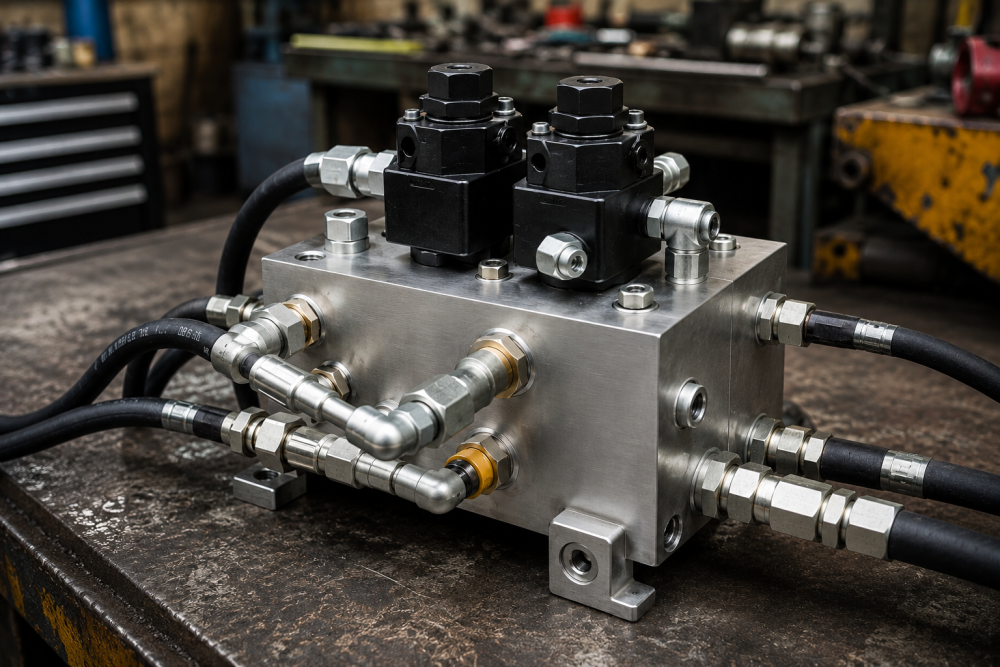
A custom transition manifold block was engineered and manufactured to reroute hydraulic flow between the cylinder ports and the relocated load-holding valves. The design process focused on maintaining hydraulic efficiency and system stability despite the altered physical configuration.
Key engineering considerations included:
The manifold was designed specifically for the machine’s hydraulic architecture and installation constraints, ensuring compatibility with the loader’s operational requirements and available mounting space.
Following manufacture, the transition manifold was installed into the front-end loader hydraulic system and the load-holding valves were relocated away from the exposed impact area.
The system then underwent controlled operational testing, including:
Testing focused on identifying any adverse effects introduced by the modified hydraulic flow path, including:
The engineered transition manifold successfully enabled relocation of the load-holding valves while maintaining stable hydraulic performance and safe system operation. Testing confirmed that the modified configuration retained load-holding capability, pressure integrity, and operational responsiveness within acceptable limits under real operating conditions.
Custom hydraulic modifications require more than component replacement. Changes to valve positioning, flow paths, and hydraulic circuit geometry can introduce complex pressure and response interactions that must be carefully engineered and validated through testing.
This project demonstrates the importance of application-specific hydraulic engineering, custom manifold design, and operational validation when modifying critical load-holding systems in mobile equipment environments.
Get in touch and discuss our Hydraulic Services with one of our experienced staff members.
Join 2300+ people who receive our monthly hydraulic tips, product updates and business news.